Summary
The power of Concrete Examples
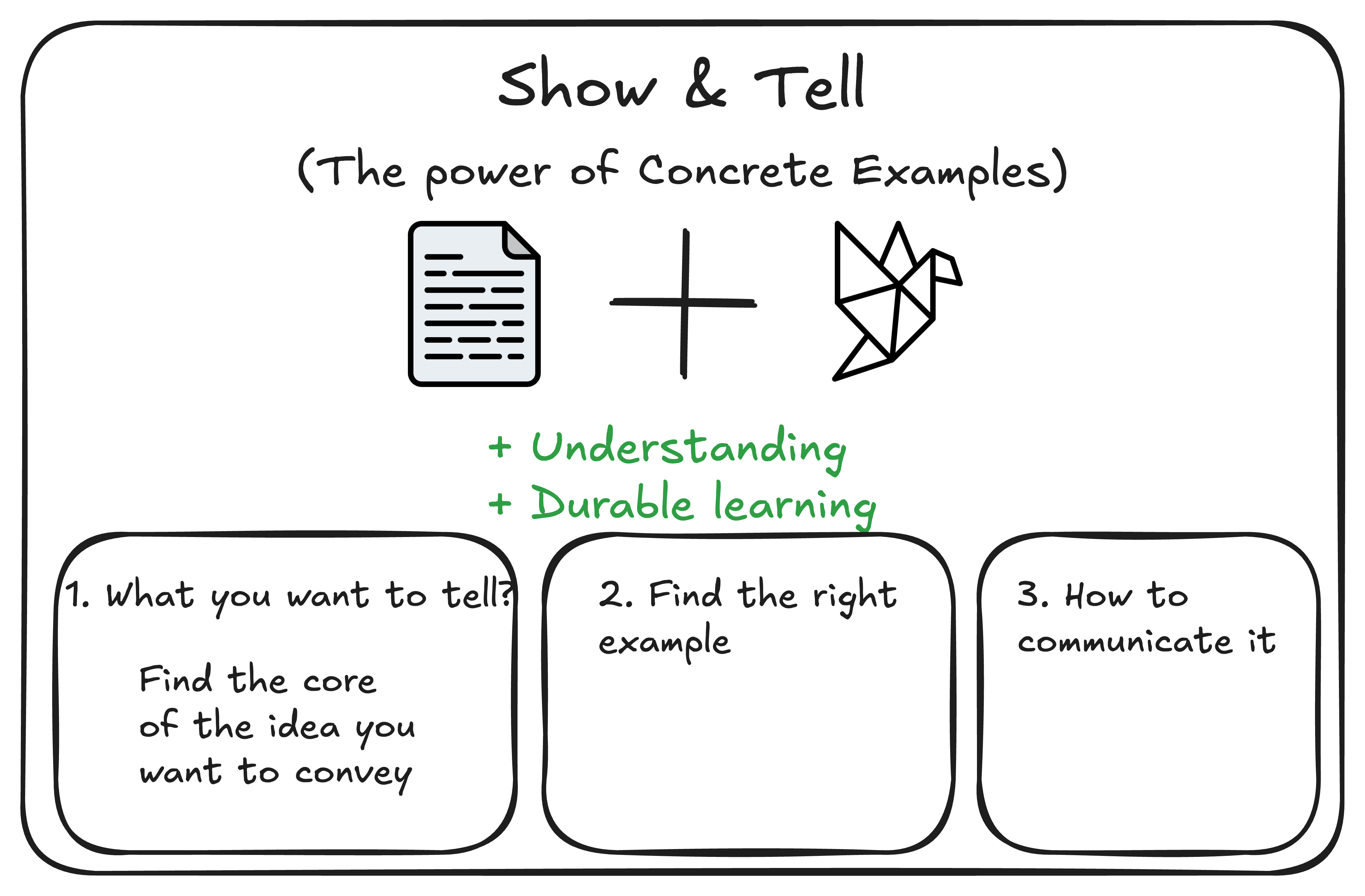
- After discussing the benefits of Concrete examples in the Experts vs Novices card, we can analyze a procedure about how to learn (and teach) something abstract with the support of examples
1: What do you want to tell?
- It’s important to find the core ideas behind what we’re learning, such that we can better understand where the difficulty lies and an example might be needed. More clarity will better support the next step
2: Find the right example
- This is the core section: Find the right example which illustrates and maps into a more digestible language the abstract idea you were struggling to learn (or teach)
I think that the way I’m creating these flashcards, (using a dual-coding approach, images + text) is to some extent comparable to the main goal of the Show and Tell model: improving the understanding and ensuring the long-term memory retention of an idea. Because an image is translating an abstract concept into concrete language. But I’ll try using more direct examples into the cards from now on, tagging this page.
3. how to engage the listeners
- Remember from Mind - Mental Model that it’s very important that the information are processed by the working memory before being encoded into the long-term memory. This is a crucial point. Find strategies that
- keep the listeners active and engaged, asking them to find alternative examples, for instance.
Credits, references and further reading
- Jim Heal & Rebekah Berlin, Mental Models, How understanding the mind can transform the way you work and learn, John Catt Educational, 2025 (9781398369689)
- File icon made by iconixar from flaticon.com
- Origami icon made by Nhor Phai from flaticon.com